I See (Infra) Red!

In a bid to aid special services soldiers, military scientists in France have developed a ‘heat-vision’ serum. Up until now, the only way for spotters and scouts to see out into the inky blackness was to use heavy light amplification goggles or infra-red goggles.

Sérum de vision thermique, or SVT, is being tested on subjects to determine its efficacy for low-light operations.

“This is not light amplification. This serum works to replace the chemicals within the rods of the retina. They become sensitive to lower frequencies, specifically infra-red. This gives the user the ability to detect form, movement and contrast in pitch black environments,” says Jacques Clauzel, Chef Chirugien Optique in charge of the research, “It’s a temporary effect, lasting about two hours before the chemicals are metabolized.”

Preliminary results are positive, he says. While refining the serum, hallucinations were common among subjects. ‘Ghosts’ and ‘Anomalies’ were cause for concern, however these were shown to be actual hot-spots in the testing area.

“It can be unnerving seeing the invisible without the aid of equipment. With training, the soldiers can come to grips with it.”ChesterLogoSmall

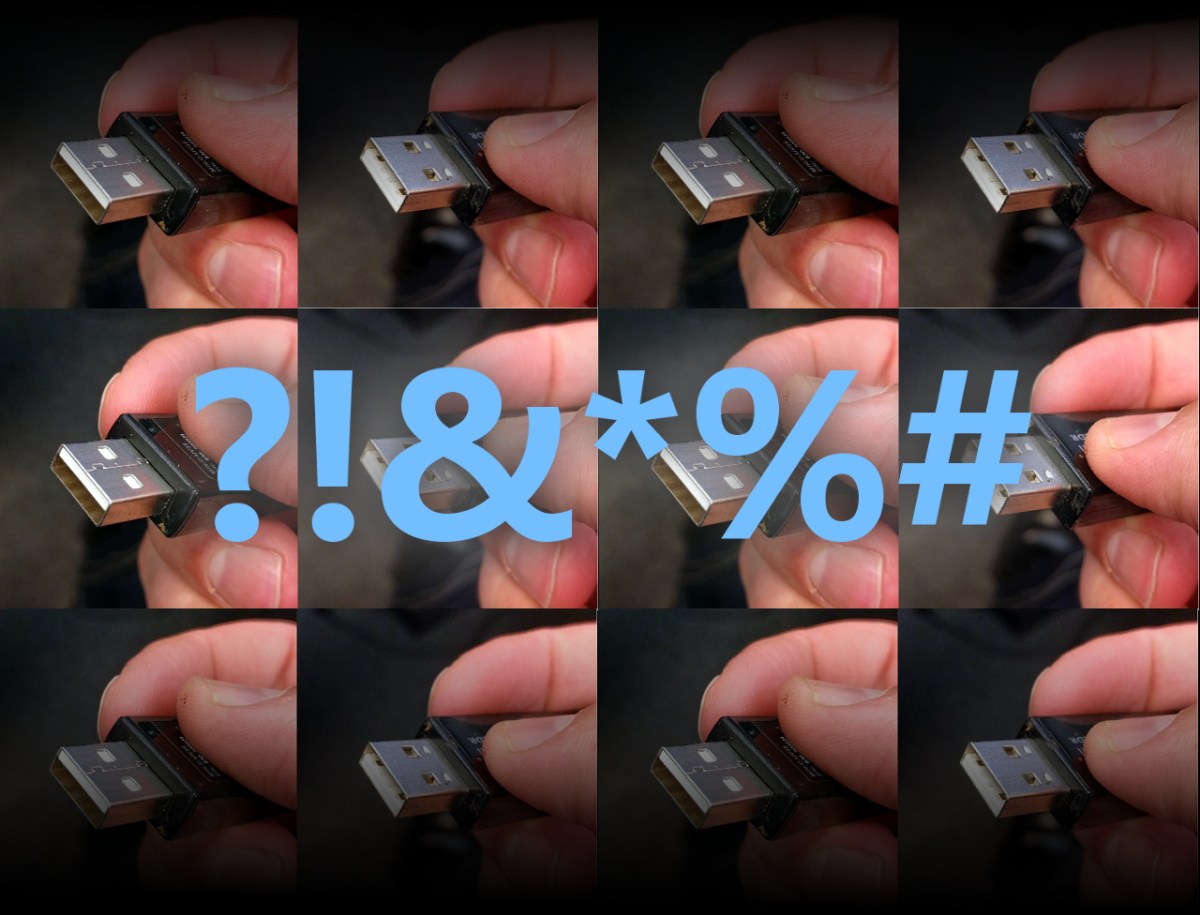
Inserting USB an emotional rollercoaster

The frustration associated with inserting a USB plug can be used to measure emotional maturity. When assessing a candidate’s EQ, researchers are often frustrated by skewed results that arise from questionnaires, situation modelling and the like. New research into the effect of physical associative emotional responses, or PAERs, reveals a reliable indicator of how an individual can deal with conflict.

“We found that the common problem of finding the right way to insert a USB elicits predictable responses in candidates. We find anticipation, disappointment, frustration, resignation, relief and even pleasure,” says Marcus Ryan, psychological researcher at Farnham and Associates.

By using electrodes placed on the subject’s scalp, the researchers are able to detect ‘micro-emotions’ that arise as physical situations develop. By measuring the length of time, amplitude and appropriate sequencing of the response, researchers can more accurately measure a subject’s ability to cope with their environment.

“The results scale fairly well. We’re trialling other physical situations, like waiting for toast to pop up from a toaster, or a turning a key that is a bit stuck, or navigating a web page with a mouse that doesn’t track properly. If all goes to plan, we may have our subjects reliably analysed before they even finish their orientation.”ChesterLogoSmall