
Ghost Hunting a Science

Following on from television shows like ‘Ghost Hunters‘ and books like ‘Paranormology‘, the hunt for ghosts and research into the spiritual realm is set to lose its pseudoscience badge in favour of a degree.

Students at the University of Mount Gambier in South Australia can now choose to become official Paranormologists. With the aim to make Paranormology as commonplace as geography or astronomy, the University is trialing the course over the next few years.

“The first few subjects deal with scientific methodology, the importance of thoroughly recording observations and peer review. Once the students have a grounding in the accepted practices, they then move on to equipment, practical training and observation techniques,” says Doctor Sue Rochester, “The word ‘ghost’ doesn’t even appear in any recommended text books until the third year.”

Unproven methodologies such as clairvoyance and seances are not part of the curriculum, says Sue, although they are addressed in the subjects of hoaxes.

“As a scientist working in a field that naturally attracts charlatanism, it’s important to know how to remain objective, how to spot human interference, how to use scientific analysis to rule out trickery.”

The Paranormology course is being piloted with a view for expanding into other fields, such as Cryptozoology and Ufology.
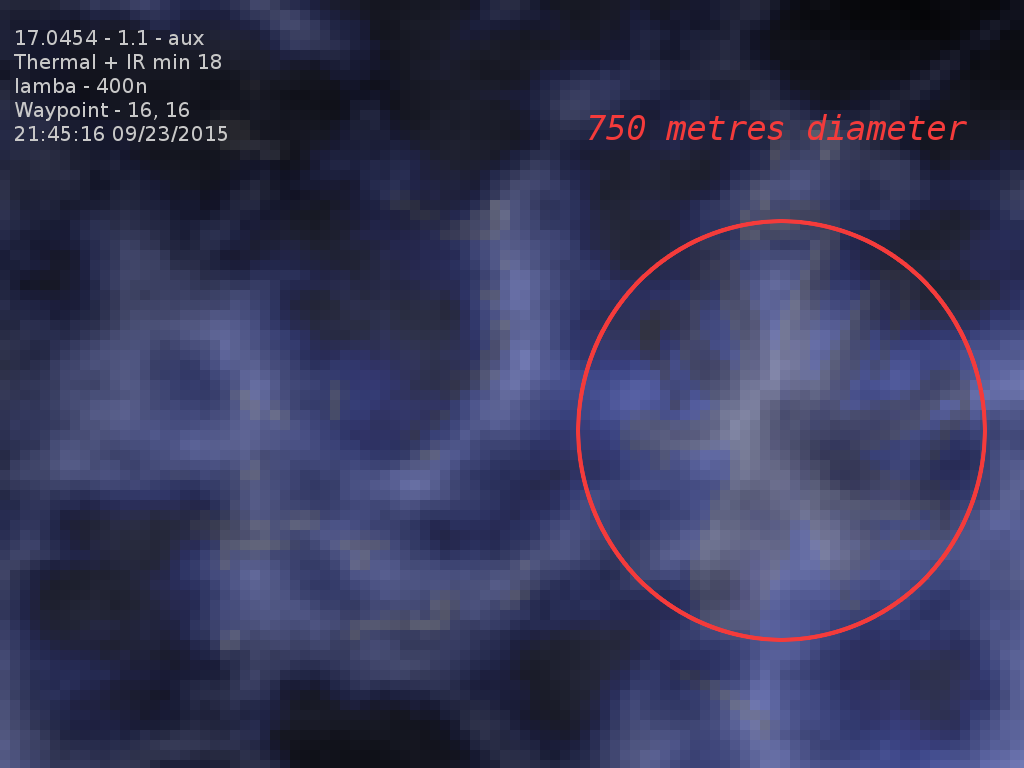

This is Not Cthulu

Captain Art O’Callaghan has played down suggestions that his crew has found ‘Cthulu’. Referring to the mythical creature created by author H. P. Lovecraft, a sonar image taken by his trench-mapping team in the Atlantic ocean shows what appears to be an enormous octopus-like creature.

When asked about the image, he denies that it is anything but ordinary, despite its likeness to mythical creatures such as the Kraken, a legendary giant octopus.

Structure, not creature,” he stresses, “We don’t know if it’s biological in nature, we don’t know if it’s moving. It’s one frame out of a thousand others that we’ve taken, and I’m not about to go calling it something it’s not. It could be an anomaly, a pocket of bubbles or an underwater mountain crest covered in algae. We just don’t know.”

A communications operator, who has refused to be named, contradicts him, “Nonsense. This is top-notch equipment that can take sonar, thermal and infra-red images of extremely deep-sea trenches. Coupled with the raw image is advanced processing and noise filtering. Anomalies or shadows like he’s suggestion just don’t happen. There is something there, and that’s that. I’ve checked it, like, five times, and it’s about 750 metres in diameter, whatever it is.”

When asked if he would be returning to the ‘Cthulu Trench’, as it is known among his crew, Captain O’Callaghan is firm, “I’m employed to do a job, and I’m doing it, end of story. We’ve got another two months worth of sweeping to do, weather permitting. The trenches won’t map themselves.”ChesterLogoSmall