I See (Infra) Red!

In a bid to aid special services soldiers, military scientists in France have developed a ‘heat-vision’ serum. Up until now, the only way for spotters and scouts to see out into the inky blackness was to use heavy light amplification goggles or infra-red goggles.

Sérum de vision thermique, or SVT, is being tested on subjects to determine its efficacy for low-light operations.

“This is not light amplification. This serum works to replace the chemicals within the rods of the retina. They become sensitive to lower frequencies, specifically infra-red. This gives the user the ability to detect form, movement and contrast in pitch black environments,” says Jacques Clauzel, Chef Chirugien Optique in charge of the research, “It’s a temporary effect, lasting about two hours before the chemicals are metabolized.”

Preliminary results are positive, he says. While refining the serum, hallucinations were common among subjects. ‘Ghosts’ and ‘Anomalies’ were cause for concern, however these were shown to be actual hot-spots in the testing area.

“It can be unnerving seeing the invisible without the aid of equipment. With training, the soldiers can come to grips with it.”ChesterLogoSmall

Biological Computers

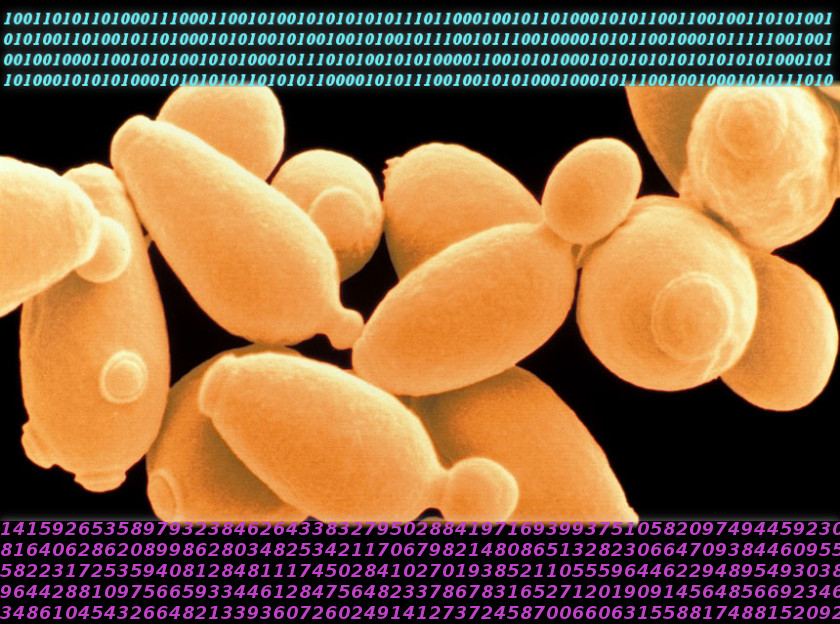
Move over Intel, the new wave of micro-processors are about to hit the shelves. Colonies of yeast can be genetically engineered to form complex logical pathways which, when applied with particular stimuli, form incredibly powerful computations.

“It’s not an exact replica of a microprocessor. There are no hard wires or transistors. There are, however, complex cellular structures that responds very quickly and very accurately. We can use these to solve amazingly complex problems in the twinkling of an eye,” according to Ron Hamrick of Dubuque, “We calculated pi to one billion digits in less than twenty minutes with only half a teaspoon of sugar and a modest colony.”

While the bio-processors are hardly suitable for watches and computers, they do have a distinct advantage over commonplace silicon-based processors: they can grow.

“As the need for more processing power rises, we can increase the size of the colony. It seems that the processing power increases according to many factors, such as cell count, sugar content, surface area and oxygen / carbon dioxide ratios. The whole concept is scalable.”

After an exhausting set of trials, Ron and his team have settled upon a particular strain to serve as a bench-mark for future trials.

“We may see in the future that genetic engineering and microprocessing join forces to create ultra-complex pathways in living creatures. Who knows what the limits are?”ChesterLogoSmall