
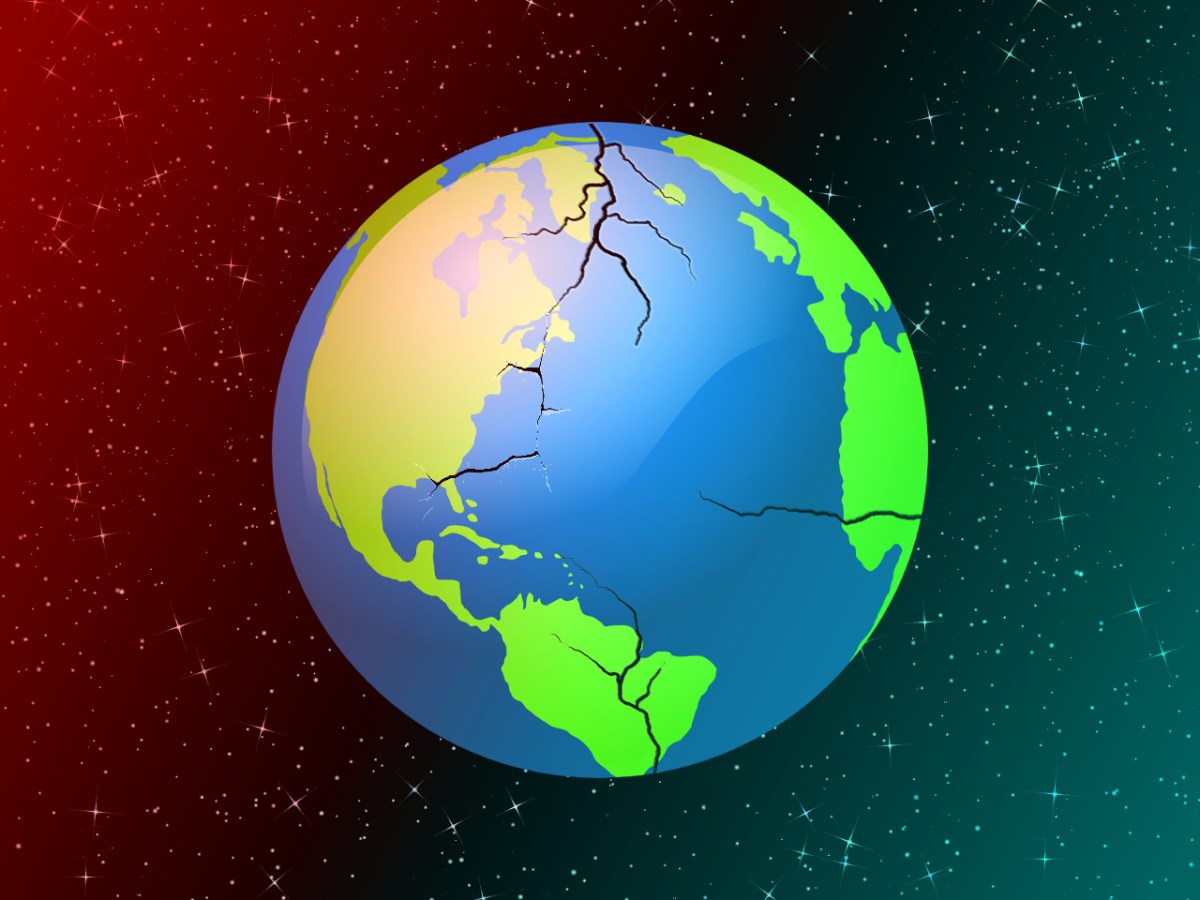
A team of Japanese seismologists and meteorologists have joined efforts to determine whether ambient temperature fluctuations have a bearing upon tectonic activity.
“It came as a surprise. We decided to compare [data from separate studies] on a whim, just to see if there was any link,” says Professor Yamato, Head Meteorologist in the study, “There is no direct correlation, not in a perfect sense, however we did see that the patterns of environmental fluctuations were followed, after the order of several years, by deviations in tectonic activity.”
In layman’s terms, it appears that there is a 14 or 15 year shift between extreme temperatures on the Earth’s crust manifesting and subsequent tectonic activities. Extreme cold and hot years cause a rippling effect, a contraction and expansion on a global scale, that disrupts the motion of tectonic plates.
“Think of it like metal fatigue. Thermal fluctuations cause ultra-long scale oscillations. Rapid expansion and contraction, and when I say rapid, I am talking about the order of years in this case, can loosen the macroscopic bonds, freeing up plates so that they move more easily.”
Professor Hiro, Head Seismologist, is more cautious when it comes to the claims.
“I will not accept that a hot spell ’causes’ earthquakes,” he says, “For that would be going too far. I will [accept that] there is a distinct and uncanny correlation between the two if we perform the time shift.”
He states that the Earth has a natural, complex cycle and that while his team’s research is potentially revolutionary, causality cannot be established with any confidence given the current research.
“More research is required, specialised and particular, and it will take many more years, I am afraid. I would hesitate to jump to any conclusions.”
An application for further research is expected to be submitted in the coming months.

 Chester Press