Radiation Link Crystal Clear

The wealthy who have more crystal glasses, pitchers and chandeliers in their house are less affected by background radiation and therefore have fewer health problems, says Doctor Merkel Van Der Gerber of Trondheim Medical Research Centre.

In a study involving data from over two hundred households, his team demonstrated that those houses with more lead crystal had consistently lower readings of Beta and Gamma radiation. In some cases, those households without crystal could have as much as 700% higher readings than those with.

“It is surprising to me. I would not have thought that such a correlation would be so apparent. We have seen previous studies that look at the air-conditioning units and how those with higher air-flow have more heavy elements, leading to higher levels of background radiation, but simply having the presence of crystal seems to be a significant factor,” he says, adding a warning, “But this is no substitute for clean living. We still advocate dusting regularly to remove dust-borne metals, and to keep air-conditioner use at a minimum.”

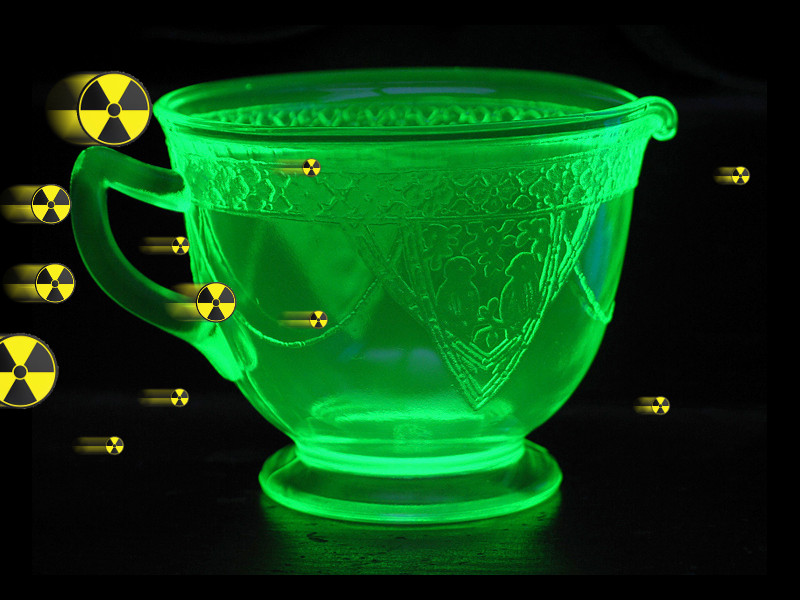
The type of crystal is significant, he adds. Higher lead content has a better blocking capacity. Glass with heavy metals like Uranium glass also contribute. The lower radiation reveals a lower rate of radiation related illnesses among the inhabitants.

“You can imagine that your crystal acts like a kind of sponge, soaking up high energy particles and isolating them. As a result of this study, I will certainly be investing in a crystal cabinet not only for looks but for my health as well.”ChesterLogoSmall

Man, it’s hot today!

“It wouldn’t be so bit if it were a dry heat. It’s the humidity that does it.”

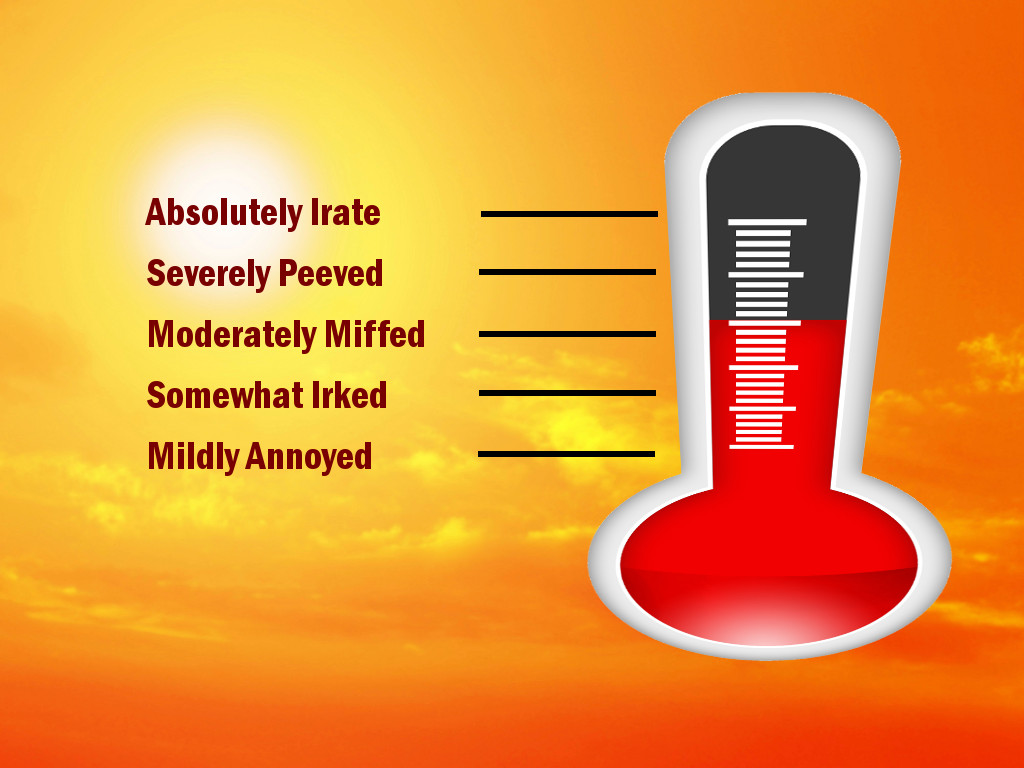
The only thing more annoying than a rhetorical complaint is an unwarranted response according to Social Ventures researcher, Jackie Marzden. While designing a new ‘annoy-o-meter’ for their social science research, they developed a system to test it, and came up with various scenarios that people find annoying.

“It’s very difficult to quantify how annoying someone or something is. Quite often the results are skewed depending on the environment, context, people and situations. For example, someone clicking their nails abstractedly might not bother someone on any other day but, given that they recently gave up smoking, their response can be overwhelming,” she says, “The scale is logarithmic in nature, which comes as no surprise. The real challenge lies in getting test subjects to feel annoyance.”

Jackie says that social niceties and politeness masks the true level of irritation a person feels. To mitigate these factors, her team lets the participants score their annoyance anonymously. The early results are interesting.

“The overall level of irritation is like a leaky bucket. The more refreshed, relaxed and comfortable a person is, the holes are in the bucket to allow irritation to dissapate. If someone is sleep deprived, undergoing major stresses or in an unfamiliar environment, their irritability increases exponentially, despite what their outward disposition is like.”

More than this, her team showed that annoying factors have a compounding effect and that ‘irritant-combos’ are exponentially more effective at annoying a subject than any single source of irritation.

Jackie explains, “We found that even the most severe irritants, such as being sneezed upon, scored a less than a combination of lesser irritants. For example and unhelpful complaint, such as those about the weather, scored about a 1 on our ire-scale, while an unhelpful response to that complaint drew an ire of 3, which is 100 times more annoying than the original irritation.”ChesterLogoSmall